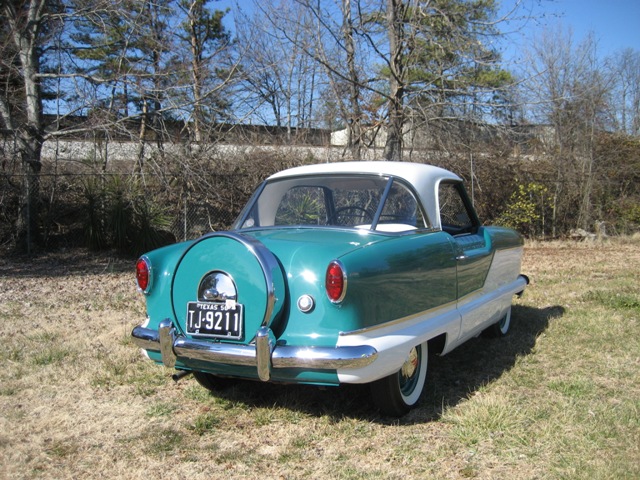
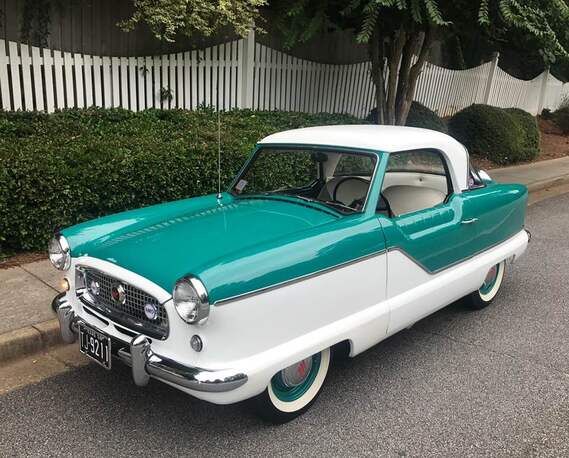
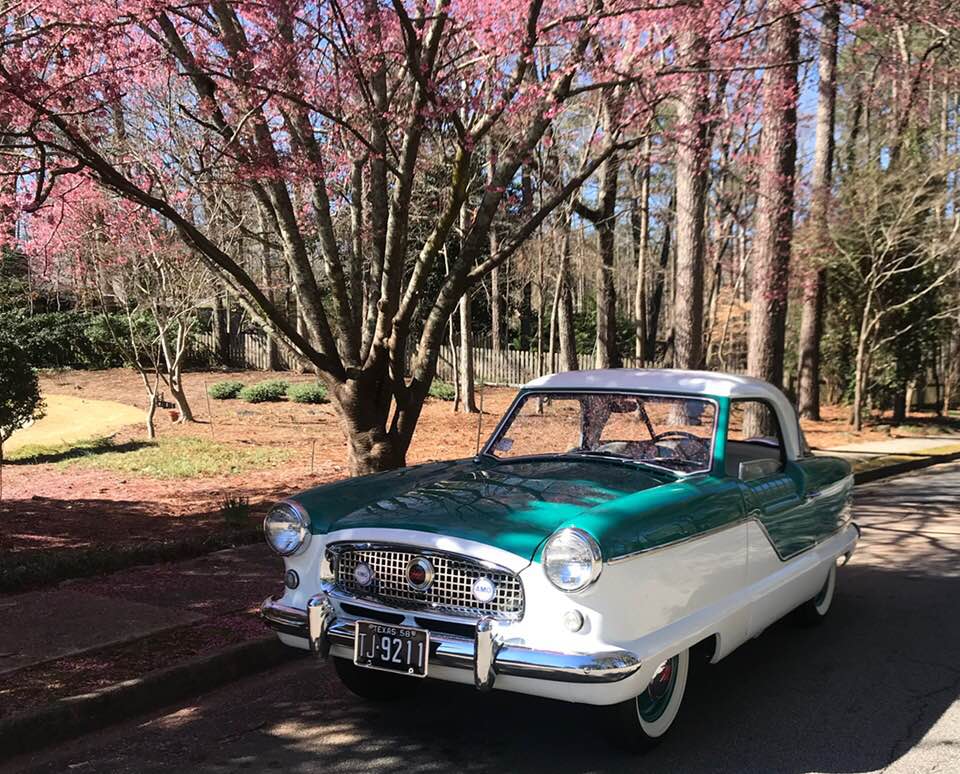
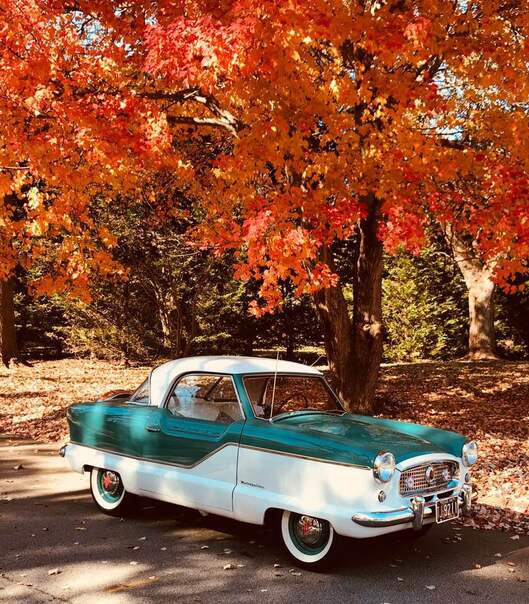
1958 NASH METROPOLITAN
- While most U.S. automobile makers were following a "bigger-is-better" philosophy, Nash Motor Company executives were examining the market to offer American buyers an economical transportation alternative.
- The Metropolitan was designed in the United States and it patterned a concept car, the NXI (Nash Experimental International), that was built by William J. Flajole for Nash-Kelvinator.
- Nash negotiated with several European companies, until settling on Austin in England (by then part of BMC).The two-tone paint scheme and compact styling was done by Pinin Farina. The bodywork was produced by Fisher & Ludlow (also a UK company), and the mechanics as well as final assembly undertaken by the Austin Motor Company. This was the first time an American-designed car had been entirely built in Europe.
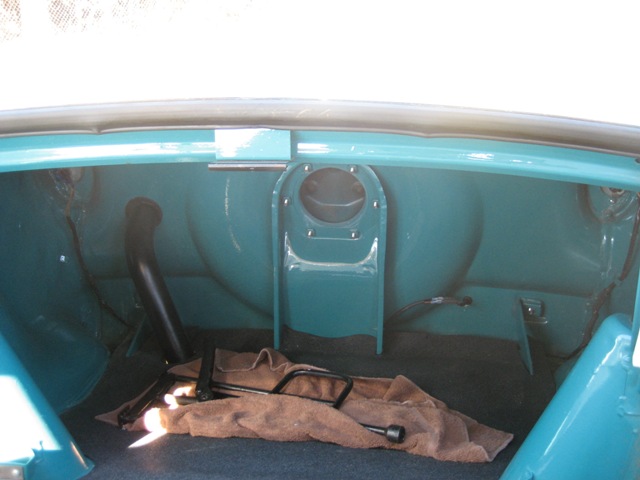
- The Metropolitan was available in two body designs - convertible and hardtop. All came with several standard features that were optional on most cars of the era. Among these production features were a map light, electric windshield wipers, and even a "continental-type" rear-mounted spare tire with cover.
- By 1957, AMC dropped both Hudson and Nash and from 1957 to 1962 the car was known as the AMC Metropolitan.
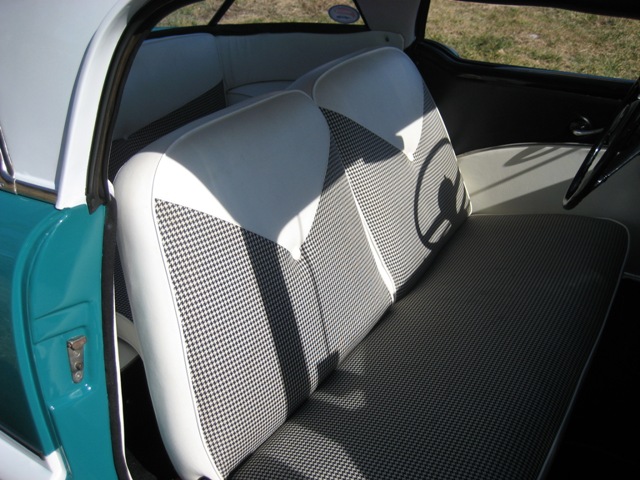
- This 1958 Metropolitan received a ground up restoration and was completed in 2000. It won Best in Class at Keels and Wheels in Houston, TX in 2003. It won the Gold Award , receiving 195 of 200 points at the AMC Nationals in Houston, TX in 2003.
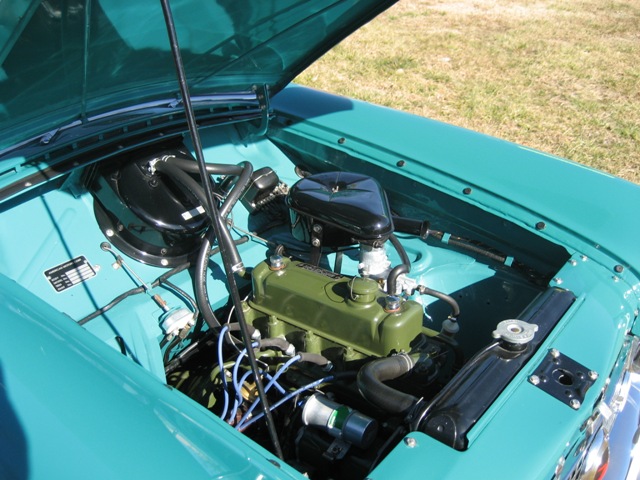
- The engine is an inline 4 cylinder with a single barrel Zenith carburetor. It is 91 cubic inches and produces 52 horsepower. Top speed is 70 mph and it gets 39.4 Miles per gallon.
- 92,000 Metropolitans were produced from 1954-1962.
- It rides on a 85 " wheelbase.
- Purchased for collection in 2007.
- Price when new $1527.00