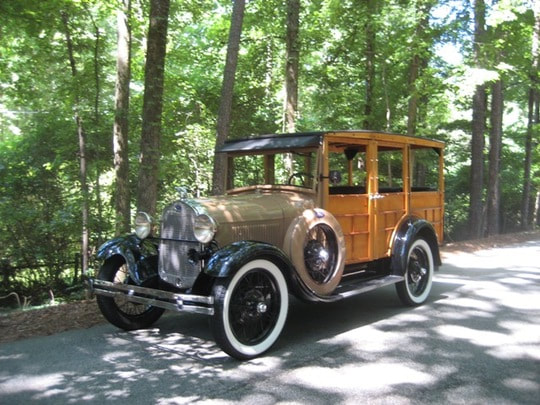
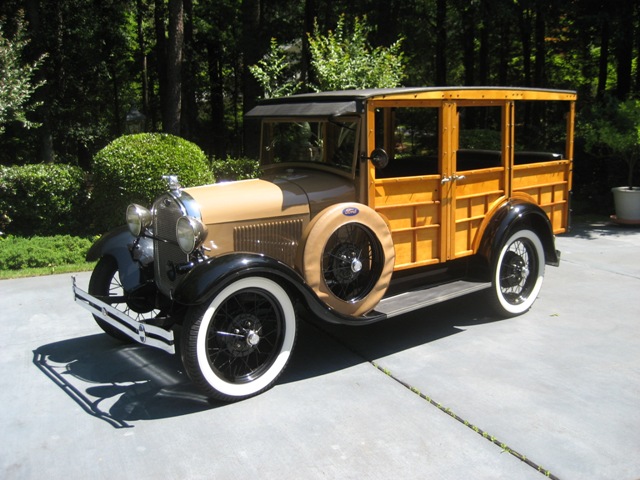
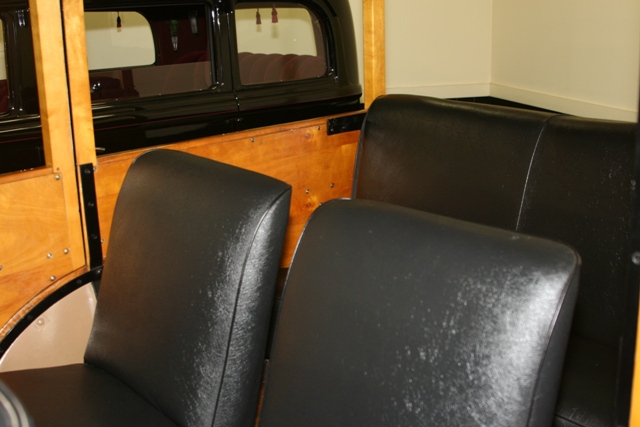
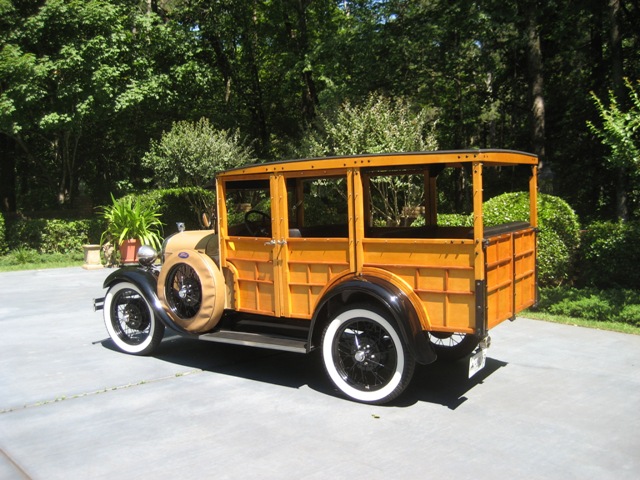
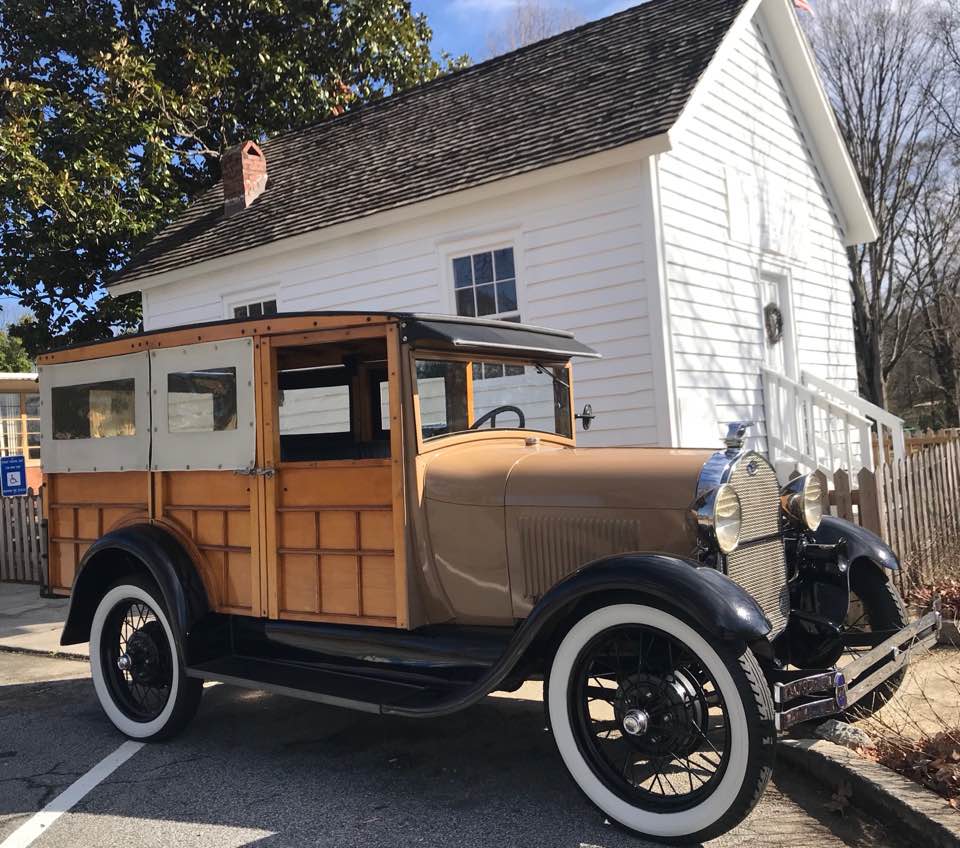
1929 Ford "Woody" Wagon
This woody was purchased from Clayton Stone of Monmouth, Oregon in 1985. Mr. Stone restored the car and kept it in good running order for many years.
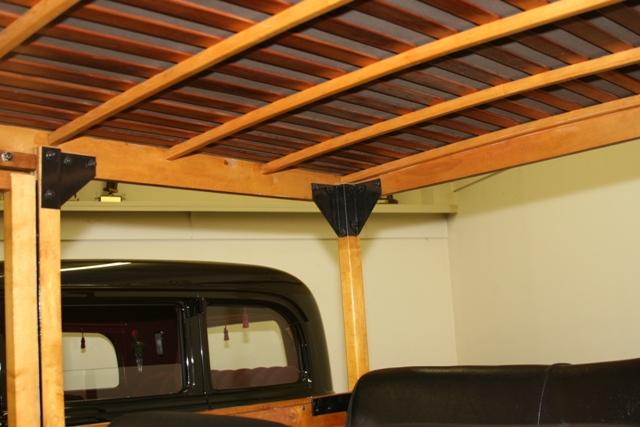
The 1929 wagon was the first year of mass production of a station wagon. Henry Ford modeled the cars after the "Depot Hacks" that delivered goods to the train stations. His idea was to merge the horse drawn wagons with the automobile for hauling purposes. These wagons were built in Ford's Iron Mountain facility in the upper peninsula of Michigan. Mr. Ford purchased this forrest because of the maple trees it had. The bodies were made of maple. Its components were then shipped to the Murray Body Co. of Detroit or to Baker-Rawling in Cleveland for assembly. Ford produced 5,200 of these wagons and were the second most expensive car in Ford's 1929 list, being exceeded in price only by the open front Town Car.
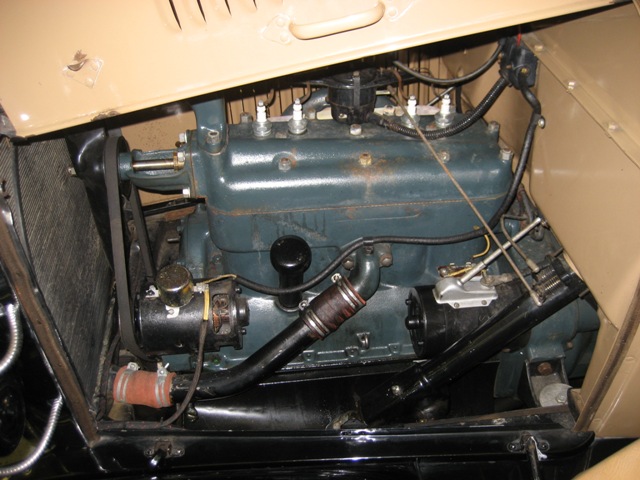
The Model A was the first car to use a laminated safety glass windscreen. The engine has a three bearing crankshaft made of carbon manganese steel. The pistons are aluminum and have chrome-silicon alloy high-duty pistons. The gearbox is three speed, worm and peg steering and cable operated four-wheel brakes.
By 1929 Ford employed 162,270 workers in the U.S. alone and the annual wage bill was 300 million dollars. He raised his daily wage from the first ever $5.00 to $7.00 that year.
Engine: 4 cylinder 200.5 cu in 40 HP
Tire Size: 4.75 x 21
Wheelbase: 103.5 inches
Price when new: $695
The 1929 wagon was the first year of mass production of a station wagon. Henry Ford modeled the cars after the "Depot Hacks" that delivered goods to the train stations. His idea was to merge the horse drawn wagons with the automobile for hauling purposes. These wagons were built in Ford's Iron Mountain facility in the upper peninsula of Michigan. Mr. Ford purchased this forrest because of the maple trees it had. The bodies were made of maple. Its components were then shipped to the Murray Body Co. of Detroit or to Baker-Rawling in Cleveland for assembly. Ford produced 5,200 of these wagons and were the second most expensive car in Ford's 1929 list, being exceeded in price only by the open front Town Car.
The Model A was the first car to use a laminated safety glass windscreen. The engine has a three bearing crankshaft made of carbon manganese steel. The pistons are aluminum and have chrome-silicon alloy high-duty pistons. The gearbox is three speed, worm and peg steering and cable operated four-wheel brakes.
By 1929 Ford employed 162,270 workers in the U.S. alone and the annual wage bill was 300 million dollars. He raised his daily wage from the first ever $5.00 to $7.00 that year.
Engine: 4 cylinder 200.5 cu in 40 HP
Tire Size: 4.75 x 21
Wheelbase: 103.5 inches
Price when new: $695